In the Middle East, a car is more than just a mode of transport; it is a significant investment and a statement of style. However, the climate in the UAE characterized by scorching temperatures, high humidity, and relentless UV radiation is one of the most hostile environments in the world for automotive paint. While most owners worry about sandstorms or mechanical overheating, the most consistent damage comes from the sun itself.
In this comprehensive guide, we explore the science of paint degradation and how the latest advancements in Ceramic and Graphene coatings from CrosX Middle East provide a permanent solution to the “Sunburn” effect on vehicles.
To understand the solution, we must first understand the problem. Modern automotive paint consists of three layers: the primer, the base coat (color), and the clear coat. The clear coat is designed to protect the color and provide shine, but it is porous and sensitive to heat.
The Oxidation Process:
When your car sits under the Arabian sun, UV rays penetrate the clear coat. This radiation breaks down the molecular bonds of the paint’s polymer structure. As these bonds weaken, oxygen molecules from the air begin to bond with the paint, leading to oxidation.
For decades, car enthusiasts used Carnauba wax to protect their vehicles. While wax provides a beautiful “wet look” shine, it has a very low melting point usually around 60°C to 80°C. In the UAE, the surface temperature of a dark-colored car parked in the sun can easily exceed 90°C.
Essentially, traditional wax melts and evaporates within days of application in Dubai or Abu Dhabi. It offers zero long-term UV protection and can actually trap dust and sand on the surface as it softens in the heat.
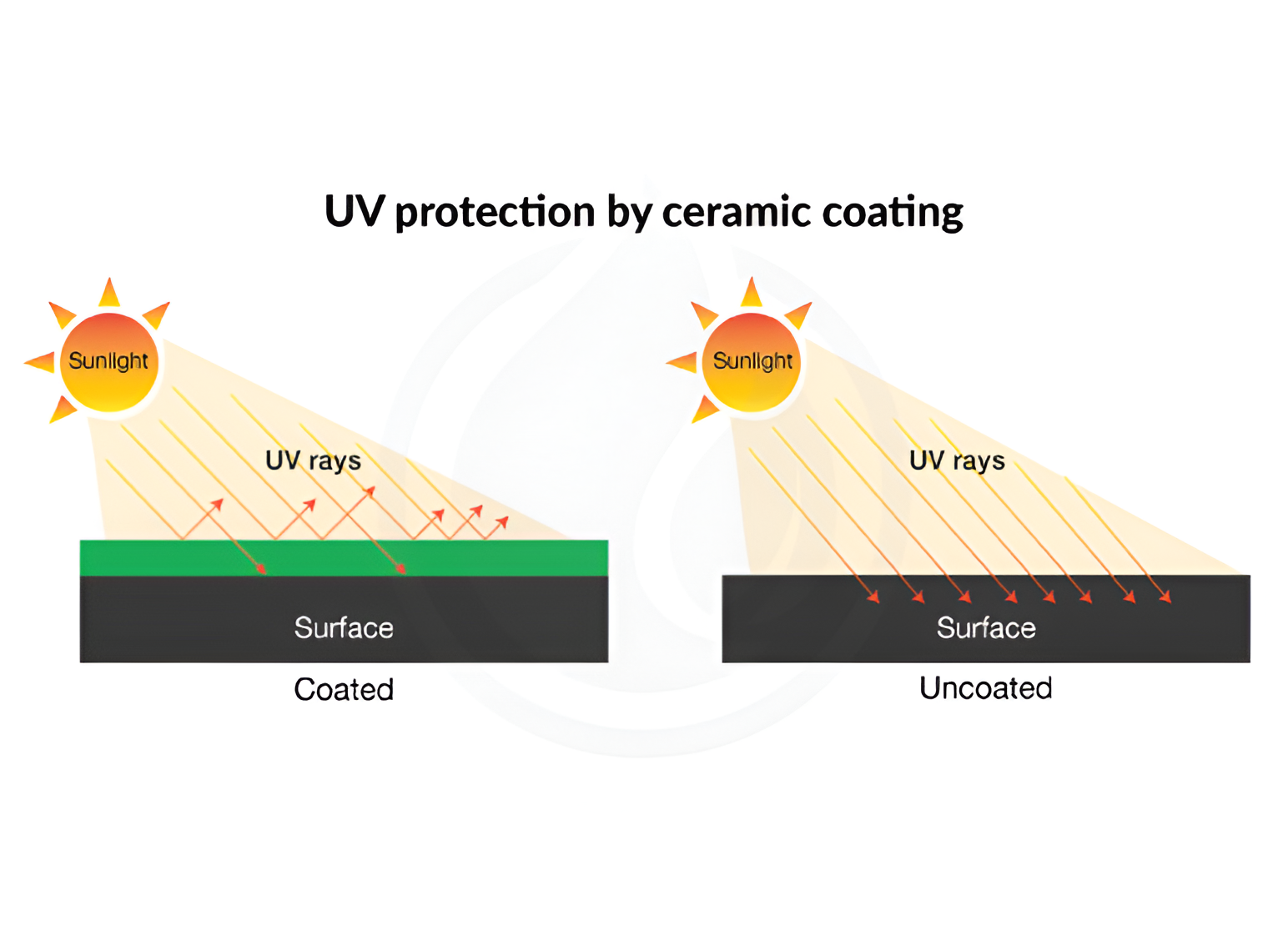
Ceramic coatings, such as those offered by CrosX, are not like wax or sealants. They are composed of Silicon Dioxide ($SiO_2$) or Silicon Carbide ($SiC$). When applied to the paint, these nanostructures undergo a chemical reaction with the clear coat to create a permanent or semi-permanent bond.
How Ceramic Coating Blocks UV:
At CrosX Middle East, we provide advanced Graphene Coatings. Graphene is a single layer of carbon atoms arranged in a honeycomb lattice. While it offers all the benefits of Ceramic, it has a unique advantage for the UAE: Thermal Conductivity.
Graphene actually helps dissipate heat across the surface of the car rather than letting it “soak” into one spot. This reduces “water spotting” a common issue in the Middle East where mineral-heavy water evaporates instantly on a hot hood, leaving etched-in circles. Graphene’s high water-contact angle ensures that water beads and rolls off before it has a chance to bake into the surface.
The heat in the UAE acts as a catalyst for chemical damage. Bird droppings, tree sap, and even the acidic minerals in sand become much more corrosive when heated by the sun. On an unprotected car, a bird dropping can etch into the paint in less than 30 minutes under direct sunlight.
CrosX coatings are chemically resistant. They create a surface that is so slick and non-reactive that contaminants cannot “bite” into the clear coat. This gives the owner significantly more time to wash the vehicle without fearing permanent damage.
The used car market in the UAE is highly competitive. Buyers look closely at the “condition of the body.” A car that has been protected by a professional coating from day one will always command a higher price. It maintains the “depth” of color that makes a car look new, even after years of exposure to the elements.
By investing in a CrosX coating, you are essentially “locking in” the factory finish. When it comes time to sell, the paint will look identical to a car that has been kept in a climate-controlled garage.
While many “ceramic” sprays are available in retail stores, they lack the concentration of active ingredients found in professional-grade CrosX products. A true ceramic coating requires:
At CrosX Middle East, we empower professional detailers with the highest-grade formulations designed specifically to handle the high-UV index of this region.
In a climate as harsh as the UAE’s, paint protection is no longer a luxury it is a necessity. A high-quality Ceramic or Graphene coating is the only way to effectively “defeat the desert heat” and preserve the integrity of your vehicle’s exterior.
Protecting your car’s finish is about more than just aesthetics; it’s about preserving the value and longevity of your asset against an environment that is constantly trying to break it down.