
Dubai summers destroy cars. Temperatures soar above 50°C. Vehicles suffer. Most owners see fading. Few understand why. The process involves physics. Chemistry plays a role too. Understanding this saves money.
Your vehicle faces a harsh environment. The sun acts as a silent enemy. Damage starts small. Issues grow over time. We will explain how heat impacts your vehicle exterior.
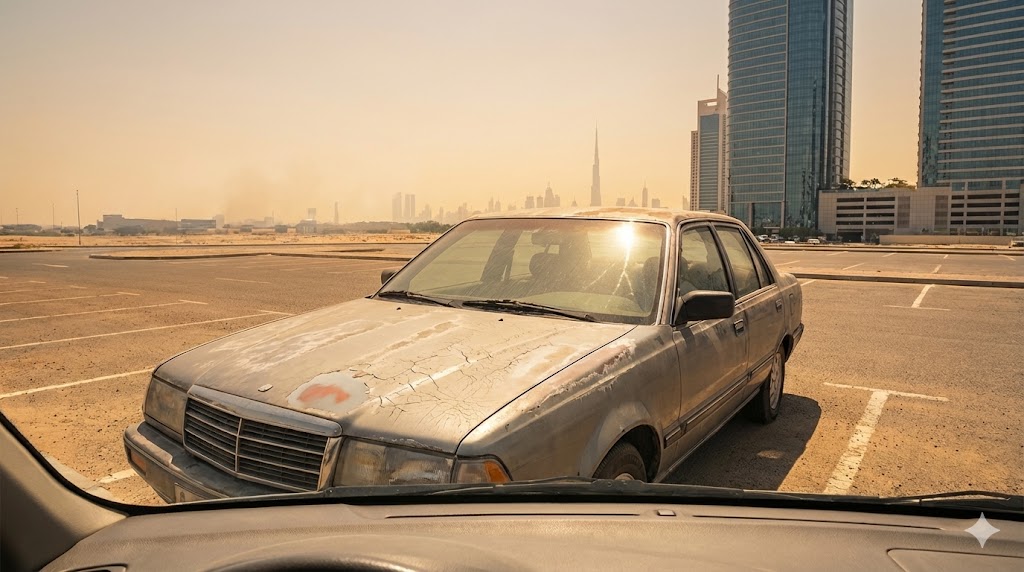
Metal expands when hot. Car panels grow in size during the day. Paint layers stretch to cover the surface. This movement creates tension.
Night brings cooling. Metal contracts. Paint shrinks. Daily cycles stress the material. Elasticity fails eventually. Micro-fractures appear. Professionals call this “crazing.” Spiderweb cracks form deep in the clear coat. Moisture enters these cracks. Rust begins underneath.
High-quality paint protection films absorb this stress. These films stretch better than factory paint. They hold the surface together despite temperature swings.
The sun emits radiation. UV rays bombard your vehicle. These rays attack chemical bonds. Modern cars use clear coats for shine. Radiation breaks the bonds holding this layer together.
Binders fail. Pigment loses protection. Oxygen enters the color layer. A chalky white residue forms. We call this oxidation. Red, black, and blue cars show this first. Once oxidation starts, polishing helps only briefly. The damage is permanent.
Heat changes physical properties. Clear coats are plastic. Plastics soften in high temperatures. Your car surface becomes malleable at noon.
Sand is everywhere in the UAE. Dust lands on the soft surface. The particles sink in slightly. Washing a hot car causes issues. You drag embedded sand across the paint. Deep scratches result. Swirl marks cover the hood.
A standard wash cannot prevent this. You must let panels cool.
Bird droppings contain uric acid. Sap contains sticky sugars. In cooler climates, you have time to clean. Dubai heat changes the timeline.
Water evaporates from the droppings instantly. The acid becomes concentrated. Heat opens the paint pores. Acid penetrates deep into the layers. Cooling traps the corrosive substance inside. Permanent wrinkles form on the surface.
Correction requires heavy sanding. Sometimes, repainting is the only option.
Sprinklers cause problems too. Water droplets sit on the hood. The sun shines through the water. Each drop acts as a magnifying glass.
Beams focus on a tiny point. The paint burns. Minerals bake into the crater. We call these Type II water spots. Removing them is difficult. Prevention is better.
Protection is necessary. Wax melts quickly here. Sealants last a few weeks. You need durable barriers.
If you see signs of fading or want to prevent these issues, contact us for a professional assessment. Our team can recommend the right defense for your vehicle.
Does waxing help in Dubai?
Wax offers weak protection. The melting point is low. Summer heat dissolves wax in days. Synthetic sealants work better. Ceramic options work best.
Can I fix sun-faded paint?
Restoration is possible early on. Polishing removes dead layers. Severe oxidation requires repainting. Prevention costs less than repair.
Why does my hood look dull?
Direct sunlight hits horizontal surfaces hardest. The hood gets the most heat from the engine and sun. This double heat source accelerates failure.
Is a car cover safe?
Covers scratch dirty cars. Wind rubs the fabric against dust. Only use covers on clean vehicles. Ensure the fabric breathes to release trapped heat.
How often should I wash my car in summer?
Wash weekly. Dust builds up fast. Humidity makes dust stick. Regular cleaning prevents dirt from embedding in soft paint.