There is a common misconception in the automotive world: once a car is treated with a premium Ceramic Coating or Paint Protection Film (PPF), it never needs to be washed again.
At CrosX Middle East, we wish that were true. However, while our coatings and films significantly reduce the effort required to clean your car, they are not “self-cleaning” in the literal sense—especially in the dusty, mineral-heavy environment of the UAE. If you want that incredible “water-beading” hydrophobic effect to last for years instead of months, you need a maintenance strategy. This guide reveals the professional secrets to keeping your CrosX-protected vehicle in showroom condition.
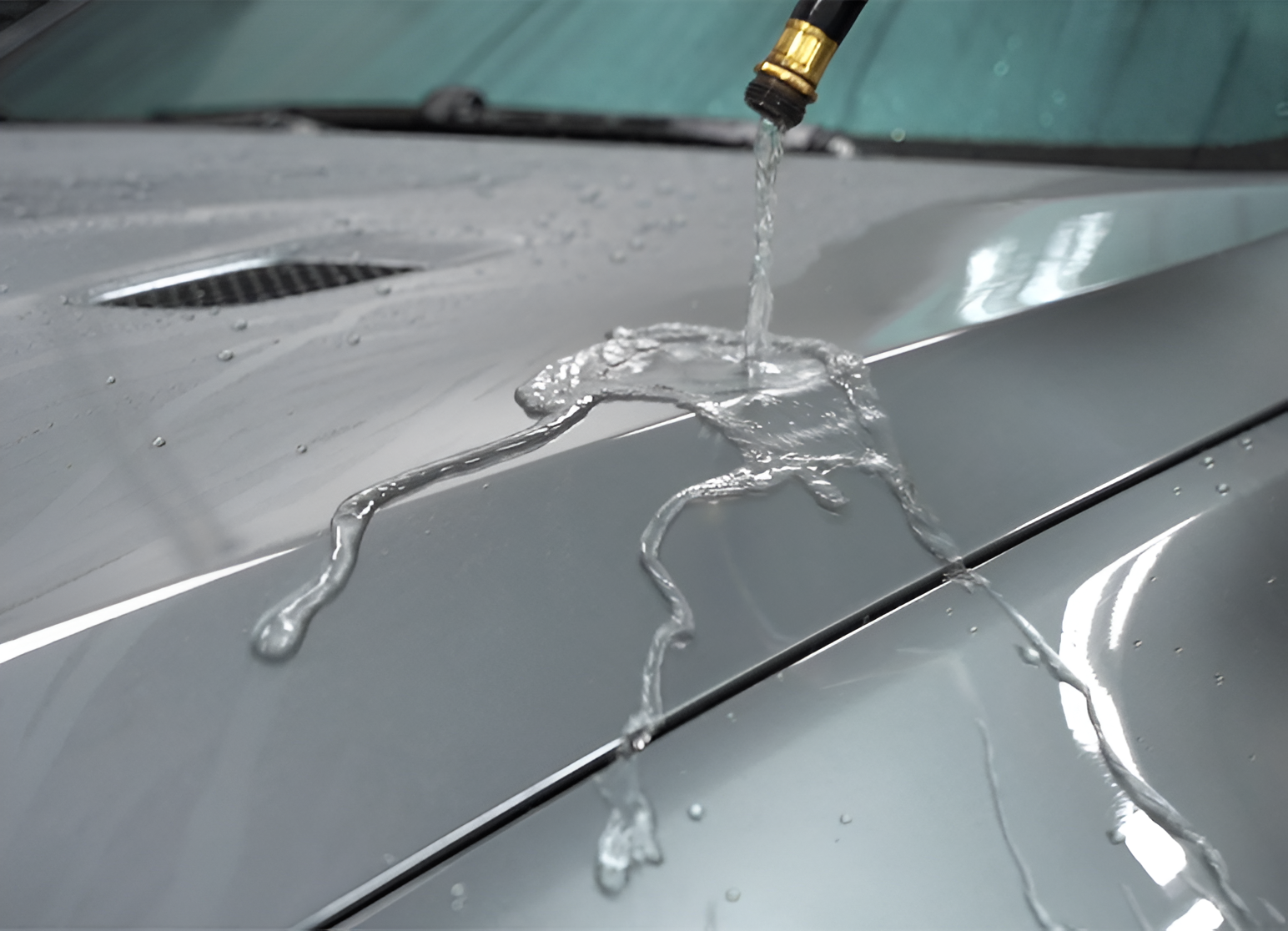
The “hydrophobic” effect occurs when a surface has a very high surface tension, causing water to bead into spheres and roll off. This is often referred to as the “Lotus Effect.”
When a customer complains that their coating has “stopped working,” 99% of the time, the coating is still there. It has simply been clogged. In the UAE, several factors “mask” the coating:
When these contaminants sit on top of the coating, they create a “flat” surface that allows water to pool. Maintenance is the process of removing this “mask” to reveal the hydrophobic layer underneath.
If you take your ceramic-coated car to a standard Dhs 20 automatic brush wash or a roadside “bucket-and-rag” cleaner, you are effectively destroying your investment. These methods introduce “swirl marks” thousands of microscopic scratches that catch the light and dull the shine.
The Professional Setup:
In the Middle East, water is often desalinated and can contain high mineral content. If you wash your car in the sun and the water dries on the paint, it leaves “Water Spots.” These minerals can etch into the coating if left too long.
Maintenance Secret: Never wash your car in direct sunlight. Always wash in the early morning, late evening, or under a shade. Use a CrosX Drying Towel (a high-GSM twisted loop microfiber) to soak up water instantly before it has a chance to evaporate.
Every 3 to 4 months, a standard wash isn’t enough. You need to perform a “Decon Wash” to remove the invisible contaminants mentioned earlier.
Think of your Ceramic Coating like a battery. Over time, the top molecular layer can become slightly worn. To keep the performance at 100%, we recommend a “Top-Up” or “Boost” spray.
CrosX Hydrophobic Boost is a Sio2-based spray sealant that can be applied in minutes after a wash. It adds a fresh layer of silica to the surface, significantly increasing the water-beading and adding an extra layer of slickness. This “sacrificial” layer takes the brunt of the environmental wear, preserving the main coating underneath.
If your car is wrapped in CrosX TPU Film, maintenance is slightly different. While PPF is incredibly tough, it is a porous material.
The UAE heat doesn’t just attack the outside; it bakes the interior. UV rays coming through the windshield can dry out leather and fade plastics.
In the UAE, we recommend:
Investing in a CrosX Middle East protection package is the first step. Maintaining it is the second. By following this professional maintenance routine, you aren’t just keeping your car clean; you are ensuring that the money you spent on PPF or Ceramic Coating pays dividends for years to come.
A well-maintained car is easier to drive, more beautiful to look at, and worth significantly more when it comes time to upgrade. Treat your coating with respect, and it will shield your car from the harshest elements the Middle East can throw at it.