If you have recently purchased a new vehicle in the UAE or are looking to restore a prized possession, you have likely encountered two terms: Paint Protection Film (PPF) and Ceramic Coating.
Both are marketed as “ultimate protection,” but they are fundamentally different technologies. One is a physical skin; the other is a liquid chemical bond. At CrosX Middle East, we believe that an informed customer is a satisfied customer. This guide will break down the mechanics, costs, and performance of both, helping you decide which shield fits your lifestyle.
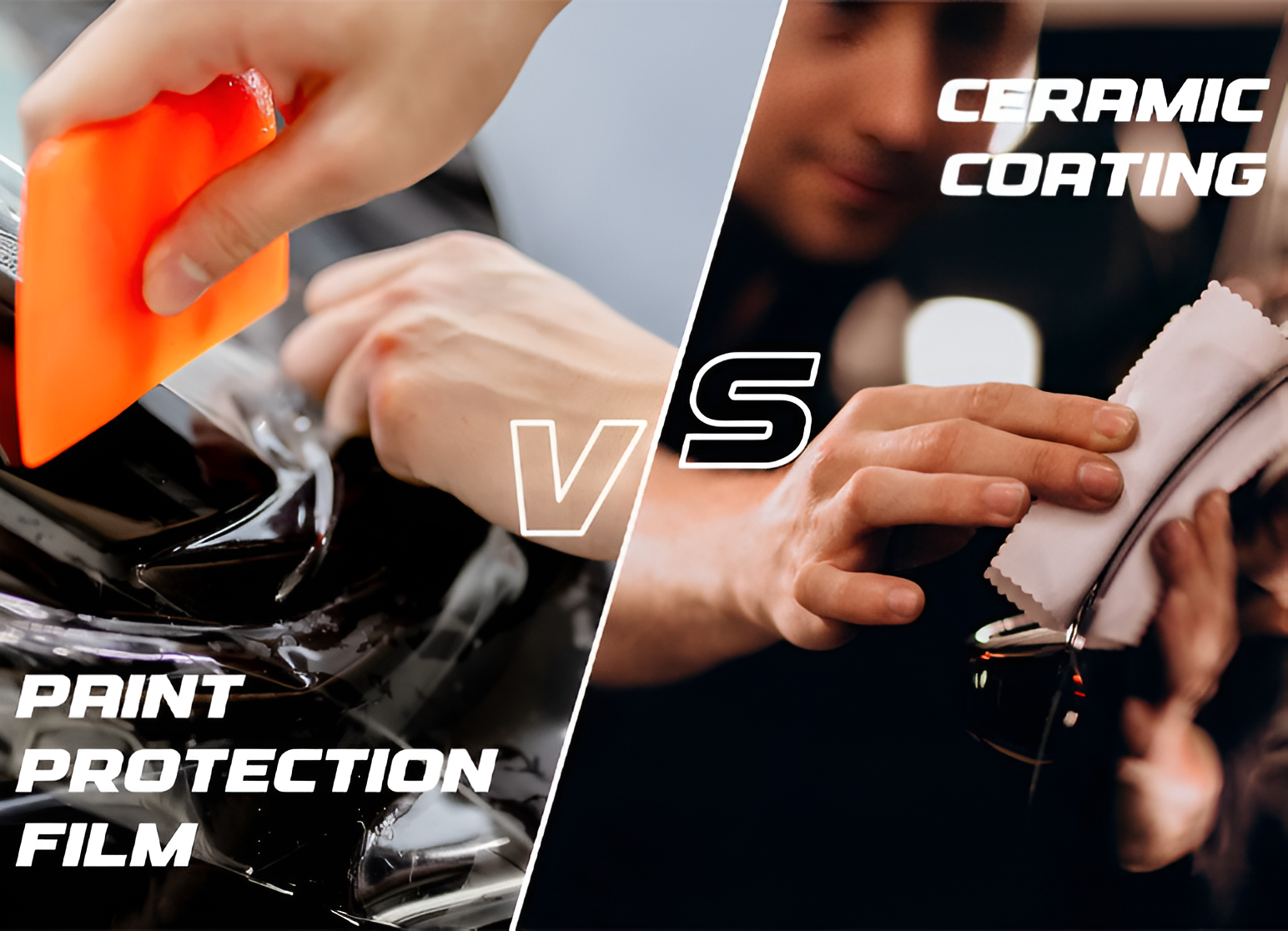
Originally developed for military use to protect helicopter rotor blades from debris, PPF (often called “Clear Bra”) has evolved into a sophisticated automotive solution.
Modern PPF, such as the CrosX Advanced TPU Series, is a high-grade Thermoplastic Polyurethane film. It is a thick, transparent layer applied over the painted surfaces of a vehicle.
The Anatomy of PPF:
Unlike a film, a Ceramic Coating is a liquid polymer. When applied by hand, it chemically bonds with the vehicle’s factory paint, creating a layer of protection that does not wash off or require repeated application like wax.
CrosX Ceramic Coatings are built on $SiO_2$ (Silicon Dioxide) technology. At a molecular level, they fill the microscopic valleys and pores of your car’s clear coat, creating a surface that is perfectly flat and incredibly hard.
This is where the two products diverge most sharply.
PPF is the Heavyweight Champion of impact resistance. Because it is a physical film (usually 8-10 mils thick), it acts as a shock absorber. When a stone flies off the back of a truck on the Sheikh Zayed Road, the PPF takes the hit. The film may deform or even tear, but the paint underneath remains untouched.
Ceramic Coating provides zero impact protection. While it is “hard” (often rated 9H on the pencil hardness scale), it is extremely thin. It cannot prevent rock chips or deep door dings. Its strength lies in resisting environmental impacts like bird droppings, acid rain, and UV rays.
Ceramic Coating is the winner for visual “Pop.” While PPF looks great, Ceramic Coating creates a level of depth and “wet look” shine that is difficult to replicate. Because it is a crystal-clear liquid, it enhances the clarity of the paint. It also possesses incredible hydrophobic properties, meaning water and dirt slide off effortlessly.
PPF has improved significantly. In the past, PPF was known for “yellowing” or having an “orange peel” texture. However, CrosX’s premium TPU films are virtually invisible and offer a high-gloss finish. We even offer Matte PPF, which can transform a glossy car into a sleek, satin-finished machine while protecting it simultaneously.
In the Middle East, heat and sand are the primary concerns.
Ceramic Coatings make a car easier to wash. The “lotus effect” (hydrophobicity) means that 80% of the dirt on a coated car can be removed with a simple pressure wash. You rarely need to scrub the paint, which prevents future scratches.
PPF requires a bit more care around the edges. While the film is tough, you must be careful with high-pressure washers near the edges of the film to prevent lifting. However, a PPF-wrapped car is generally more “forgiving” of imperfect wash techniques because of its self-healing nature.
Longevity:
There is a significant price gap between the two:
Why choose one when you can have both? The most popular package at CrosX Middle East is the “Track Pack” or “Full Front” Hybrid:
At CrosX Middle East, we provide the tools and products for both. Whether you are a workshop owner looking for the best TPU films or a car enthusiast seeking the ultimate graphene coating, we have the specialized solution for the Middle East market.